

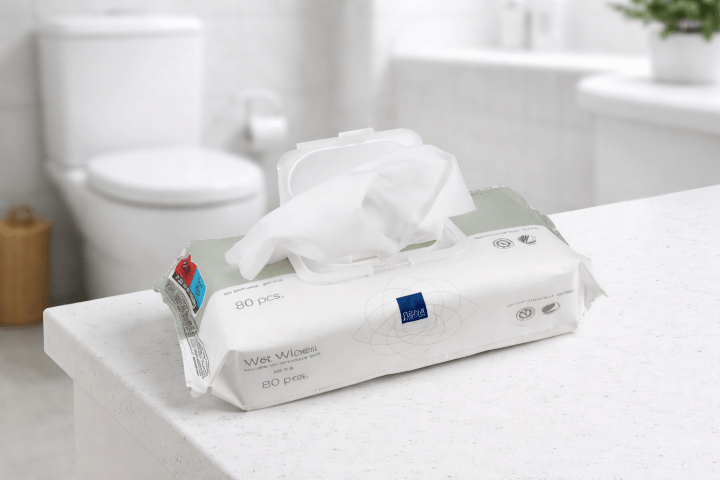
Are Wet Wipes Flushable? The Shocking Truth That Saves You Thousands
We get it. In a busy life, convenience is king. The idea of a quick clean-up with a moist, sturdy wipe that you can simply flush away is incredibly appealing. Manufacturers have sold millions on this dream, slapping the word “flushable” on packages with a reassuring smile.
But here’s the hard, inconvenient truth that every professional plumber knows: That “flushable” wipe is a ticking time bomb for your plumbing.
This single act of convenience is an illusion, one that leads to blocked pipes, raw sewage backing into your home, and repair bills that can run into the thousands of dollars. As your trusted GHS Plumbing & Electrical experts, we’re here to cut through the marketing hype with the cold, hard facts. This guide will expose the myth, show you the proof, and give you the simple, safe disposal advice that protects your home.
The Short Answer Every Plumber Agrees On
Let’s be unequivocal. Let’s be direct.
No, you should never, under any circumstances, flush any type of wet wipe.
This isn’t a matter of opinion; it’s a statement of fact based on what we pull out of clogged pipes every single day. This universal rule includes:
- Baby wipes
- Makeup removal wipes
- Household cleaning wipes
- Personal hygiene wipes
- And, most emphatically, those marketed as “flushable” wipes
The answer to "can you flush baby wipes?" is the same as for all the rest: a resounding no. If it isn’t toilet paper, it doesn't belong in your toilet. Period.
The "Flushable" Label: A Marketing Lie Exposed
Why would companies label a product “flushable” if it isn’t? The answer lies in a dangerous loophole.
The term “flushable” is completely unregulated. No government standard defines what it must mean. Manufacturers use it because they can, relying on a deceptive technicality. For them, “flushable” simply means the wipe will physically exit the toilet bowl and travel down the pipe. It says nothing about what happens next.
This is not just a plumber’s gripe; it’s a documented deception. The Australian Competition and Consumer Commission (ACCC) has taken legal action against major manufacturers, including Kimberly-Clark, for these misleading claims. A CHOICE survey revealed that 67% of Australians believe "flushable" wipes will break down like toilet paper—a devastating misconception that plumbers and water authorities are paying for daily.
For more information about protecting your home's plumbing, check out our guide on things you should never flush.
The bottom line: The label is a marketing lie designed to sell you a product, regardless of the damage it causes to your home.
The Toilet Paper Test: A Simple Experiment That Doesn't Lie
The core of the problem is material science. Let’s make it visual with a simple experiment you can try at home.
The Toilet Paper Test:
- Take a clear jar and fill it with water.
- Add a sheet of standard toilet paper and a leading brand of “flushable” wipe.
- Seal the jar and shake it gently, mimicking the flow in your pipes.
- Watch what happens:
Within minutes, the toilet paper begins to break apart, disintegrating into a soft pulp. This is by design. Toilet paper is engineered to lose its structural integrity quickly when saturated, allowing it to flow freely through sewer systems.
After 20 hours, the “flushable” wipe will remain almost entirely intact. It might be a little soggy, but it will be just as strong, holding its shape and fabric-like structure.
CHOICE conducted this exact test with rigorous results: toilet paper disintegrated in under three minutes. The flushable wipes showed no signs of breaking down after 20 hours.
This is the heart of the issue. Your wipes might be "flushable," but they are not "dispersible." They remain strong, cloth-like sheets that snag, tangle, and combine into massive, costly blockages.
The 3 Real-World Consequences of Flushing Wipes
When you flush a wipe, you’re not just making it disappear. You’re launching a problem that grows and compounds, with severe consequences.
1. Clogged Home Plumbing: A Costly Domestic Disaster
This is the most immediate threat to your wallet. Unlike toilet paper that breaks down, wipes are designed for strength. As they travel through your pipes, they:
- Snag on rough spots: Every pipe joint, corrosion point, or slight offset is a potential hook.
- Combine with other debris: They act as a net, catching hair, soap scum, and dental floss.
- Create a perfect plug: This growing mass eventually forms a complete blockage inside your own sewer lateral—the pipe connecting your home to the main street line.
The result? Slow-draining toilets, gurgling sinks, and worst of all, raw sewage backing up into your showers and floor drains. If you're experiencing these signs, our emergency plumbing services are available 24/7. The repair for this can involve digging up your yard and replacing pipes, a job that can easily cost $5,000 to $15,000—and it’s rarely covered by home insurance.
2. Sewer System Fatbergs: A Public Health Menace
What escapes your home doesn’t disappear. It joins a river of waste in the public sewer system, where it meets its best friends: Fats, Oils, and Grease (FOG). When poured down the sink, FOG cools and hardens.
Wipes act as the reinforcing fibres in this disgusting concrete. They tangle together with the congealed grease to form monstrous, rock-solid masses called "fatbergs." These fatbergs can be the size of a bus, blocking entire sewer mains and causing overflows into streets, parks, and rivers. The cost to taxpayers for their removal runs into the millions.
3. Environmental Damage
Wipes that make it through the sewer system can exit treatment plants and flow into our oceans and rivers. Unlike toilet paper, which has dissolved, these plastic-like fibres persist, contributing to microplastic pollution and harming marine life.
So, do flushable wipes clog toilets? Absolutely. They clog home pipes, public sewers, and the entire ecosystem.
What About "Biodegradable" Wipes?
This is a common and understandable follow-up question. "If they’re biodegradable, surely they’re safe to flush?"
No. This is a critical distinction.
"Biodegradable" typically means the material will break down in a landfill over a period of months or even years under specific conditions. This is completely different from what is required in a sewer system.
Your sewer pipe requires a material to disintegrate rapidly in moving water within a matter of minutes—exactly what the Toilet Paper Test demonstrates.
A wipe that biodegrades in a landfill over a year is a catastrophe in your plumbing, where it needs to break down in three minutes. The bin is the only correct disposal method for ALL wipes, regardless of their "biodegradable," "eco-friendly," or "septic-safe" claims.
The Only 3 Things Safe to Flush (The 3 P's)
To make it unforgettable, we teach every customer the golden rule of flushing. The only things that should ever be sent on a journey through your pipes are the 3 P's:
- Pee
- Poo
- (Toilet) Paper
Everything else—wipes, paper towels, feminine hygiene products, dental floss, cotton swabs, "flushable" cat litter—belongs in the trash. When in doubt, throw it out.
I Flushed Wipes, Now What? Warning Signs & Solutions
If you’ve been flushing wipes, don’t panic. But be vigilant. Here’s what to look for and what to do.
Warning Signs of a Wipe-Caused Blockage:
- Toilets draining slower than usual or gurgling after flushing. This could indicate a blocked drain.
- Water backing up in the toilet, shower, or basement floor drain when you flush.
- Unpleasant sewage odours coming from your drains.
Immediate Action:
- STOP FLUSHING. Do not add any more water or waste to the system.
- Do not use chemical drain cleaners. They are ineffective on dense wipe clogs and will severely damage your pipes with repeated use, leading to even costlier repairs.
The Professional Solution:
This is not a DIY job. Plungers and drain snakes often can’t break up the dense, tangled clump of wipes. They may provide temporary relief but leave the core of the blockage intact.
This is where GHS Plumbing & Electrical provides the expert solution. We use high-pressure water jetting technology that blasts through the wipe-and-grease mass, scouring the pipe walls clean. We then often employ a drain camera inspection to confirm the pipe is completely clear and identify any pre-existing damage. Our service isn't just a quick fix; it's a permanent solution that protects your home from future issues.
Protect Your Home and Your Wallet
The message is simple. Don’t let a “flushable” wipe flush your money down the drain. That moment of convenience is not worth the risk of a catastrophic plumbing failure.
Make the pledge today: No wipes in the pipes. Ever.
But if you’re already experiencing the warning signs of a blockage, don’t wait for a full-scale sewage backup. The experts at GHS Plumbing & Electrical are here to help 24/7. We have the tools, the expertise, and the experience to clear the blockage for good and get your plumbing back to safe, smooth operation.
We also offer a full range of plumbing, electrical, and air conditioning services across Melbourne. Call GHS Plumbing & Electrical now at 1300 320 246 for a fast, professional, and permanent solution.